

With the recent rising cost of beef, Paul Dickson shares his top tips for reducing waste and using cheaper cuts with delicious results.
It’s no secret that meat prices, particularly beef, have seen unprecedented increases recently. Not only has this resulted in seeing it disappearing from menus, but, perhaps more positively, we’ve also seen a shift in popularity of lesser-known cuts and more focus on nose to tail dining, which I hope is here to stay. This is my favourite kind of cooking, so it has been a challenge to narrow down my recipes this month! I’ve settled on three areas – the deliciousness and practicality of using beef dripping, broadening your steak offering and the benefits of low and slow cooking.
Worth the Wait
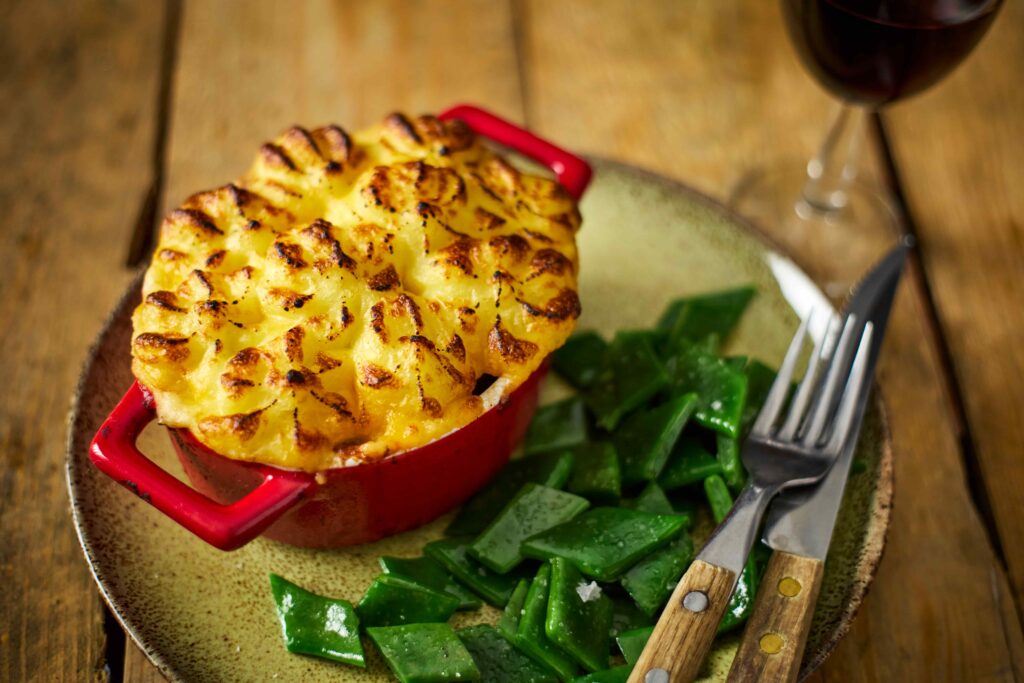
The cuts of beef that require low and slow cooking, in my opinion, are also the most rewarding in terms of flavour and texture. Take the gelatinous, rich flavour of beef shin or oxtail, for example. These cuts are generally much more budget friendly, but when given the time to cook down and tenderise, can turn into a signature dish on your menu. How about transforming a classic cottage pie into a showstopper by replacing the mince with this rich slow cooked beef shin, oxtail or a combination of the two?
Bread & Dripping
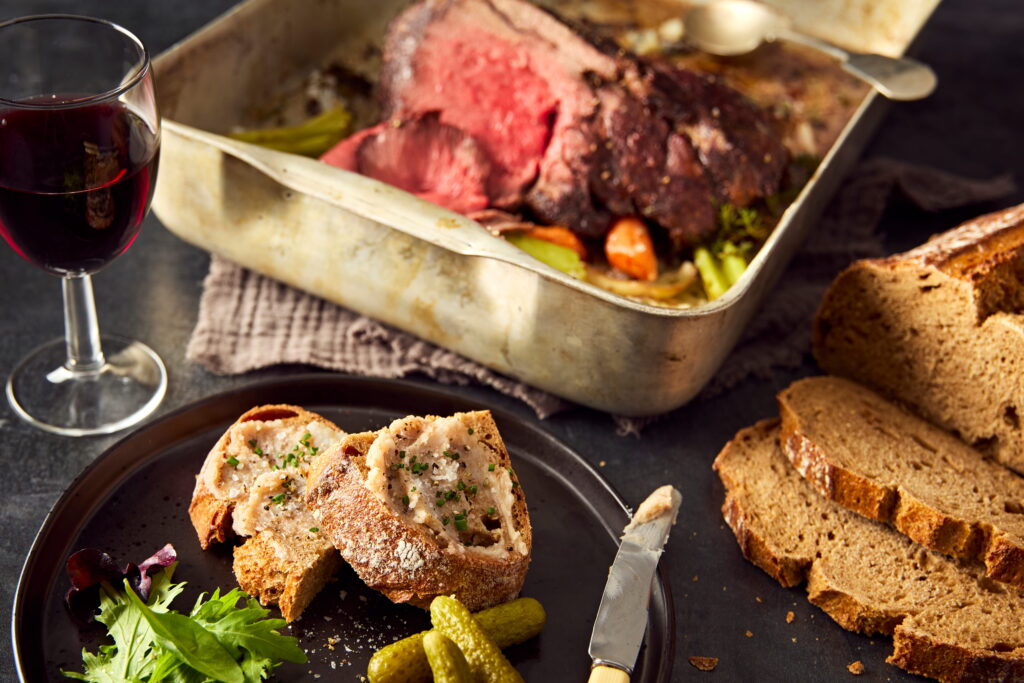
From chips to Yorkshire puds – beef dripping is having a revival. In the rise of the scrutiny of ultra-processed foods, animal fats come up trumps, and from my point of view, you can’t beat the unmistakable flavour of beef dripping. It’s great that consumers are enticed rather than put off by animal fats, so much so, in fact, that we’re starting to see bread and dripping back on menus. The nostalgia of this classic treat makes it just as at home on an on-trend restaurant menu as in a café or care home, and it’s a great way of using every bit of your beef joint to maximise your margins and minimise waste.
Humble but Mighty
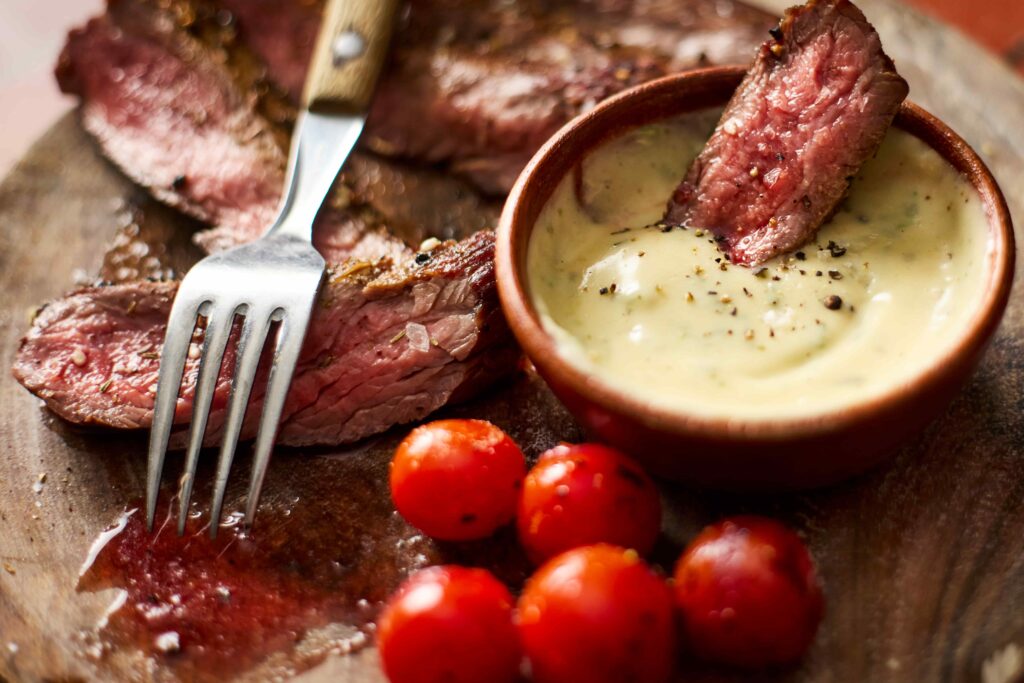
It has become challenging to include a decent steak offering on menus at a price that gives customers perceived value for money. Step aside, sirloin and enter the humble but mighty bavette. This cut, also known as flank steak, is not only more affordable than the traditional prime cuts, but has other benefits too. Its open texture helps it to absorb sauces and marinades well and it has a delicious rich flavour. The key to this cut is fast cooking over a high heat and to slice it against the grain. My favourite sauce to serve with steak is the classic béarnaise and recently, by happy accident, I elevated my recipe to the next level of flavour – having realised I didn’t have enough butter to make it, I used beef dripping instead. What a delicious discovery that I urge you to try!
Recipes & Inspiration
Paul is a Home Economist and food stylist working in London and the North West, creating exceptional visual stories in film & tv, on social media and in print. All of the recipes and videos featured in the article can be accessed online on the Country Range recipes page.